Website Modernisation

Website Modernisation

Your website shouldn't need a developer every time you want to change something.

We help established businesses move from traditional website systems to modern, AI-enabled technology that is easier to manage, easier to evolve and better suited to how marketing teams work today.

Talk to us

Recreate what already works. Redesign where it makes sense. Modernise the technology underneath.

Before

Illustrative

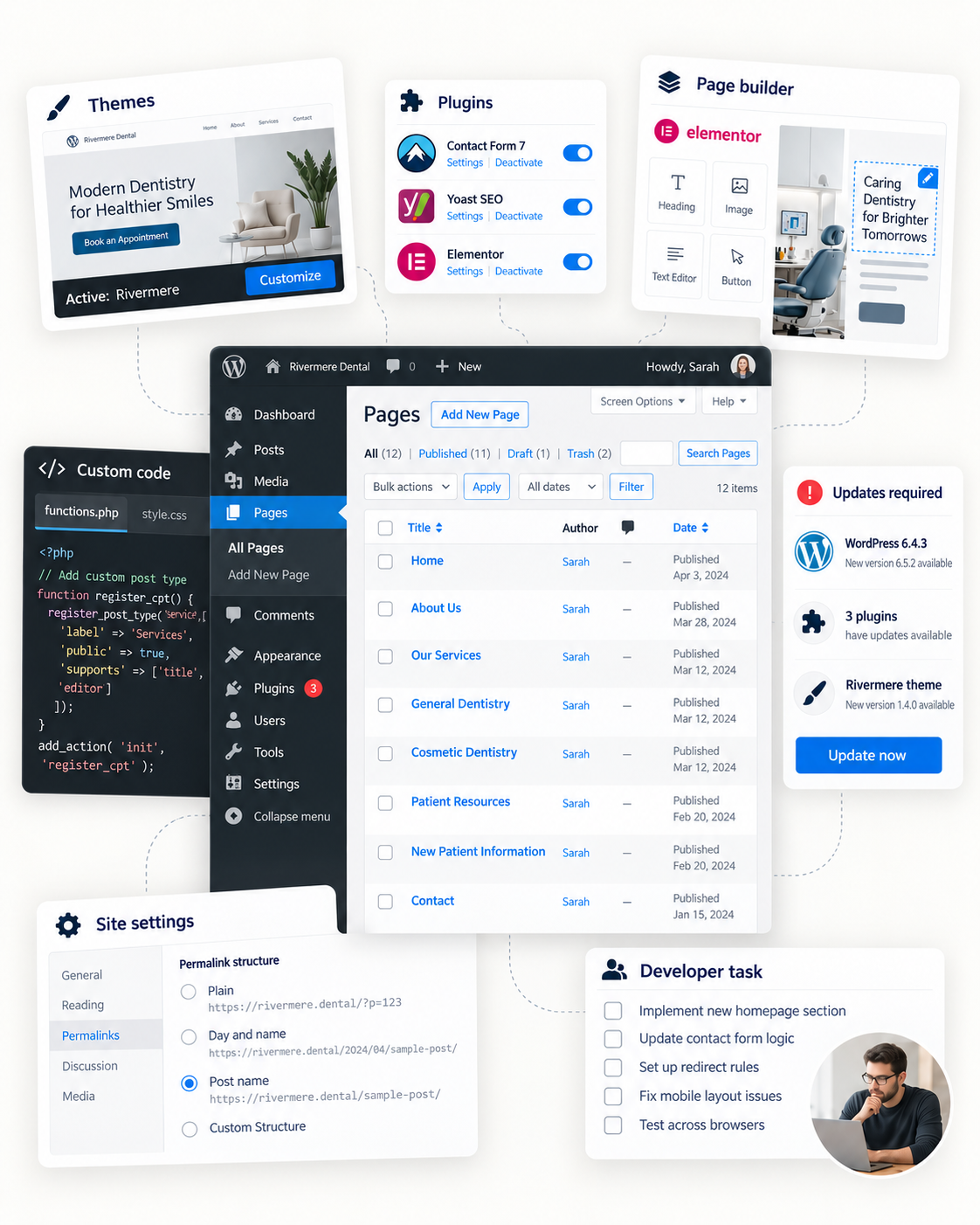
A traditional WordPress dashboard surrounded by themes, plugins, page builder, custom code, settings, updates and developer tasks

The old model

For years, the website has sat outside the marketer's control.

Marketing teams can launch campaigns, build email sequences, change messaging, run ads and automate customer journeys.

But the moment they need to make a meaningful change to the website, everything often slows down.

Traditional website systems can depend on themes, plugins, page builders, custom code and specialist knowledge. What looks like a simple change can quickly become a development task.

The website is one of marketing's most important tools, yet it has historically been one of the hardest for marketers to control.

The shift

The website is becoming something you can work with directly.

A new generation of AI-enabled website technology is changing the relationship between businesses and their websites.

Instead of learning how a CMS works, teams can increasingly describe what they want to change.

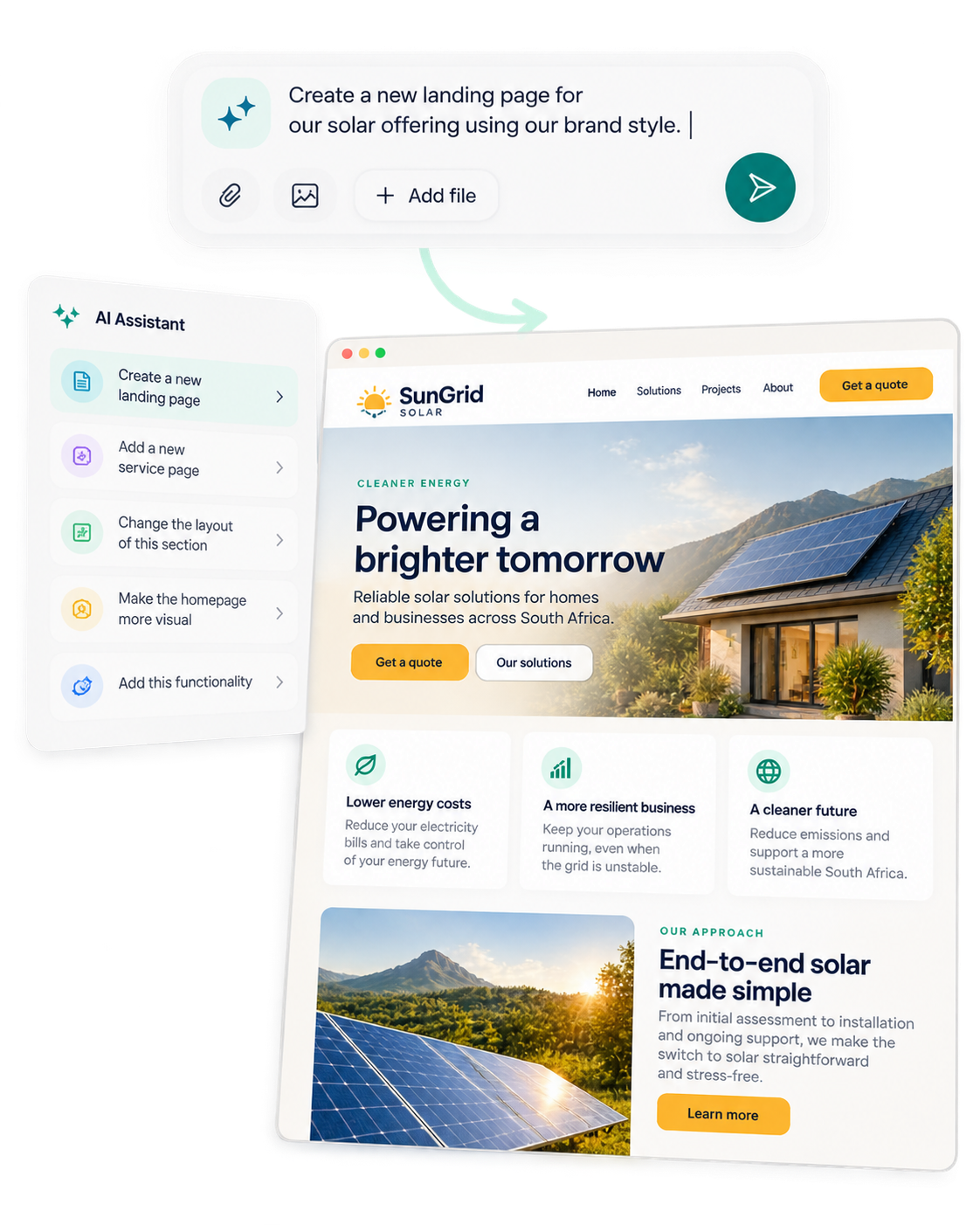
"Create a landing page for this campaign."
"Add a new service page using this information."
"Change the layout of this section."
"Make the homepage more visual."
"Add this functionality."

After

Illustrative

An AI assistant panel of example requests, a prompt describing a new landing page, and the finished website generated from it

The important change is not simply faster development.

It is that the website becomes much more accessible to the people responsible for marketing, communication and growth.

Your options

Modernisation doesn't always mean starting again.

01

Start alongside your current website

Use modern AI-enabled technology for landing pages, campaign pages or new digital experiences while the existing website remains in place.

Best for

Businesses that want to test the technology before considering a larger migration.

02

Recreate the existing website

Rebuild the current website on newer technology while keeping the existing structure, content and visual identity largely intact.

Best for

Businesses that like what they already have but want a more modern technical foundation and easier editing.

03

Redesign during the migration

Use the migration as an opportunity to improve the visual design, structure, content and user experience.

Best for

Businesses whose technology and design both need modernising.

The benefits

A website that is easier to evolve.

Create with AI

Describe the page, section or change you need and use AI to help create it.

Move faster

Launch pages, campaigns and updates without putting every change into a development queue.

Modern architecture

Move onto newer web technology designed for performance, responsiveness and continued development.

Connect more easily

Integrate the website with CRM, lead management, communication, automation and other business systems as requirements grow.

How we work

We recommend the right setup for the business.

Opengro is not tied to a single website builder, CMS or development platform.

For some businesses, a lightweight AI-enabled platform is enough. For larger or more complex organisations, a more flexible modern development stack may make sense.

We first look at:

  • The existing website
  • The internal team
  • How often content and pages change
  • Marketing requirements
  • Integrations
  • Existing blog and content
  • SEO requirements
  • Future plans
  • Technical complexity

Then we recommend the most appropriate approach.

The goal is not to move you onto our favourite tool. The goal is to give the business a website that fits how it actually needs to work.

The process

From current site to modern platform.

01

Review

Understand the current website, structure, content, technology, integrations and pain points.

02

Recommend

Define the right migration approach, platform and architecture.

03

Recreate or redesign

Rebuild the website while preserving what works and improving what doesn't.

04

Connect

Set up forms, analytics, CRM, lead flows, automation and other required integrations.

05

Launch

Test, migrate, redirect and move the new website onto the live domain.

In practice

What this looks like in the real world.

Client

Eezipay
Starting point
A WordPress website where the design was broadly right, but the platform kept breaking.
Approach
Recreate what worked, keep the brand and move the website onto modern technology.
What changed
The website is rebuilt in React on modern, AI-enabled technology, no longer held together by plugins and patches.
Current status
Launching soon.

Eezipay · The website over time

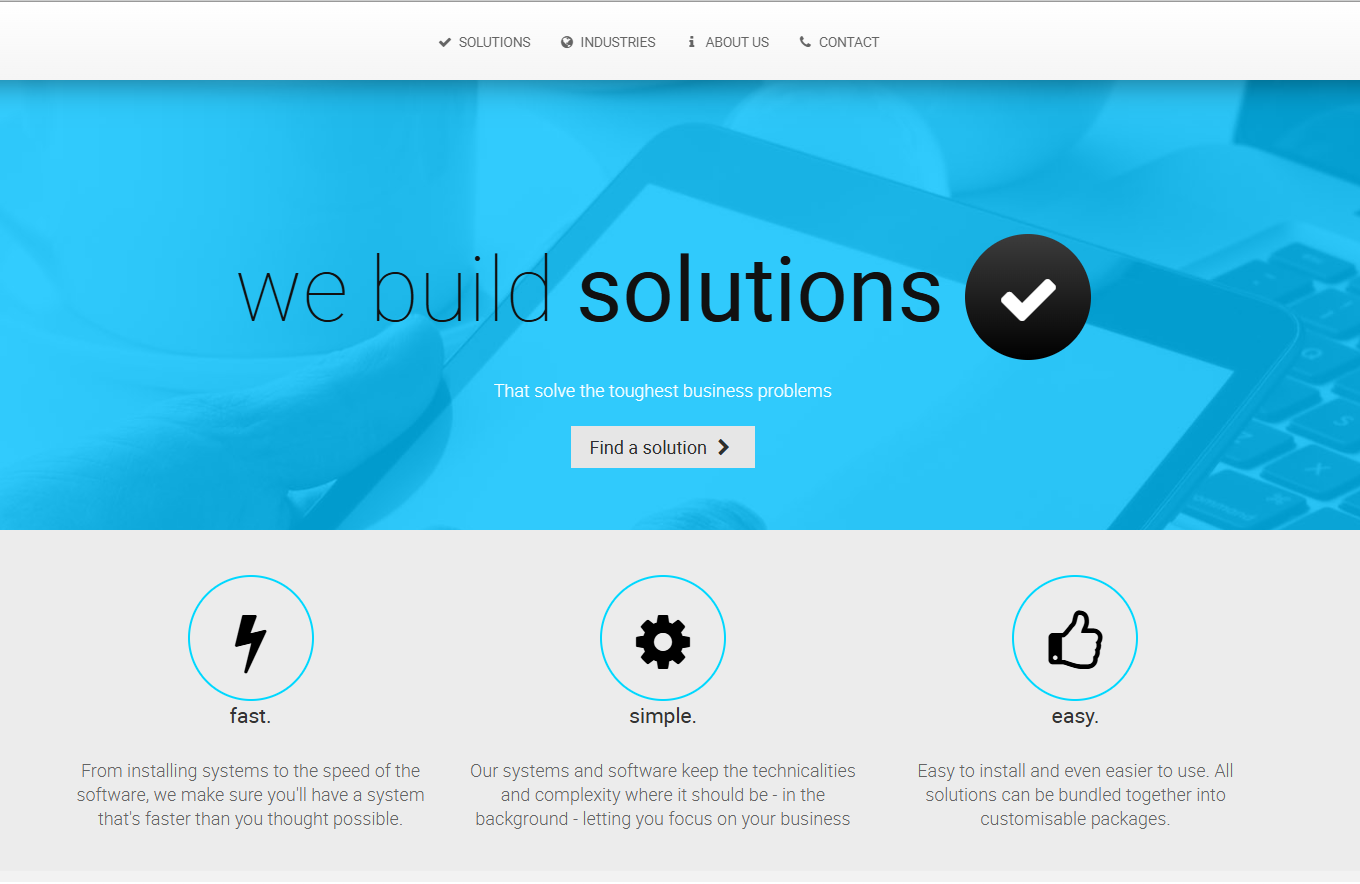
The original Eezipay website

01

Original

The first Eezipay website.

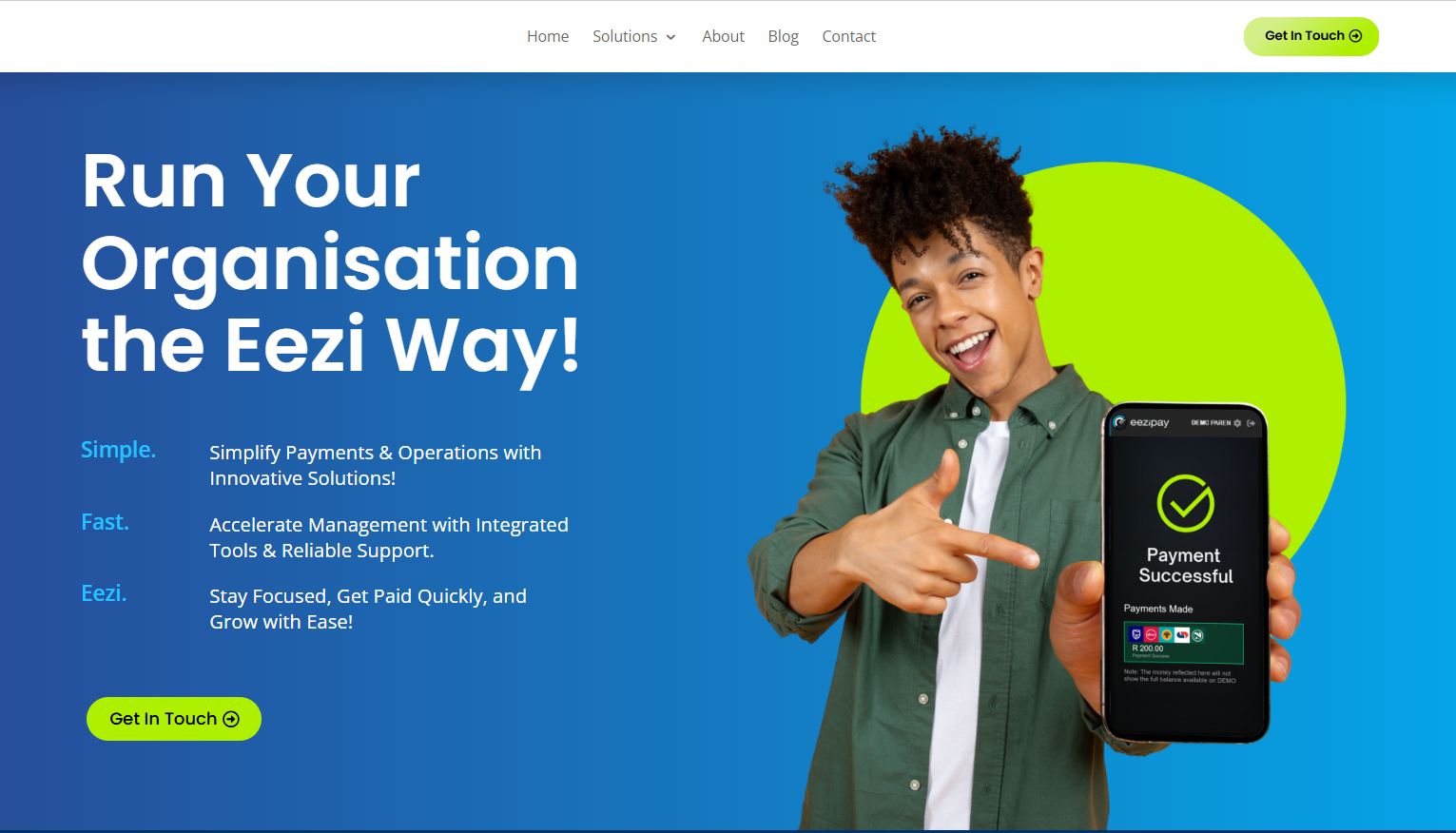
The Eezipay website on WordPress

02

The WordPress era

The design was broadly right, but the platform kept breaking.

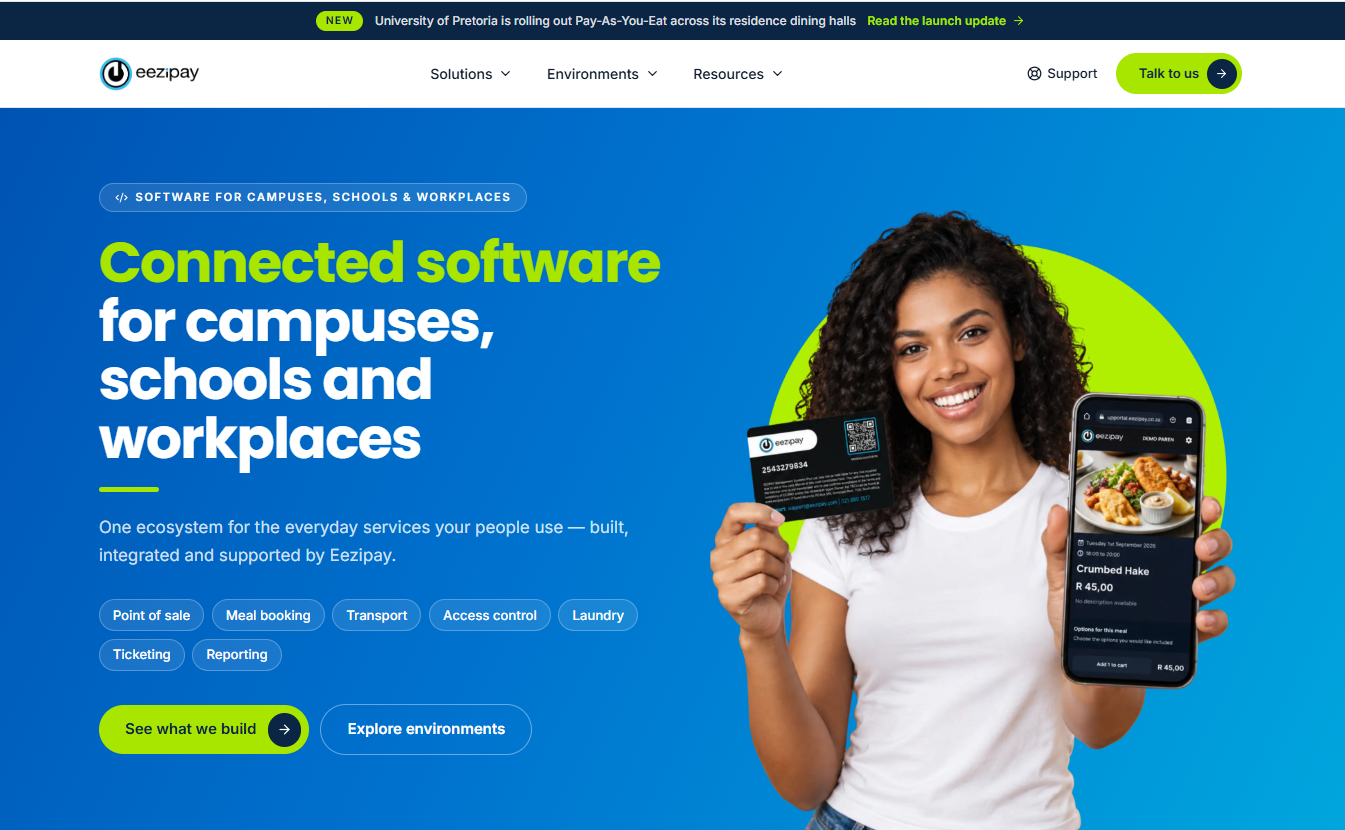
The new Eezipay website rebuilt in React

03

New React site

Same brand, modern technology underneath. Launching soon.

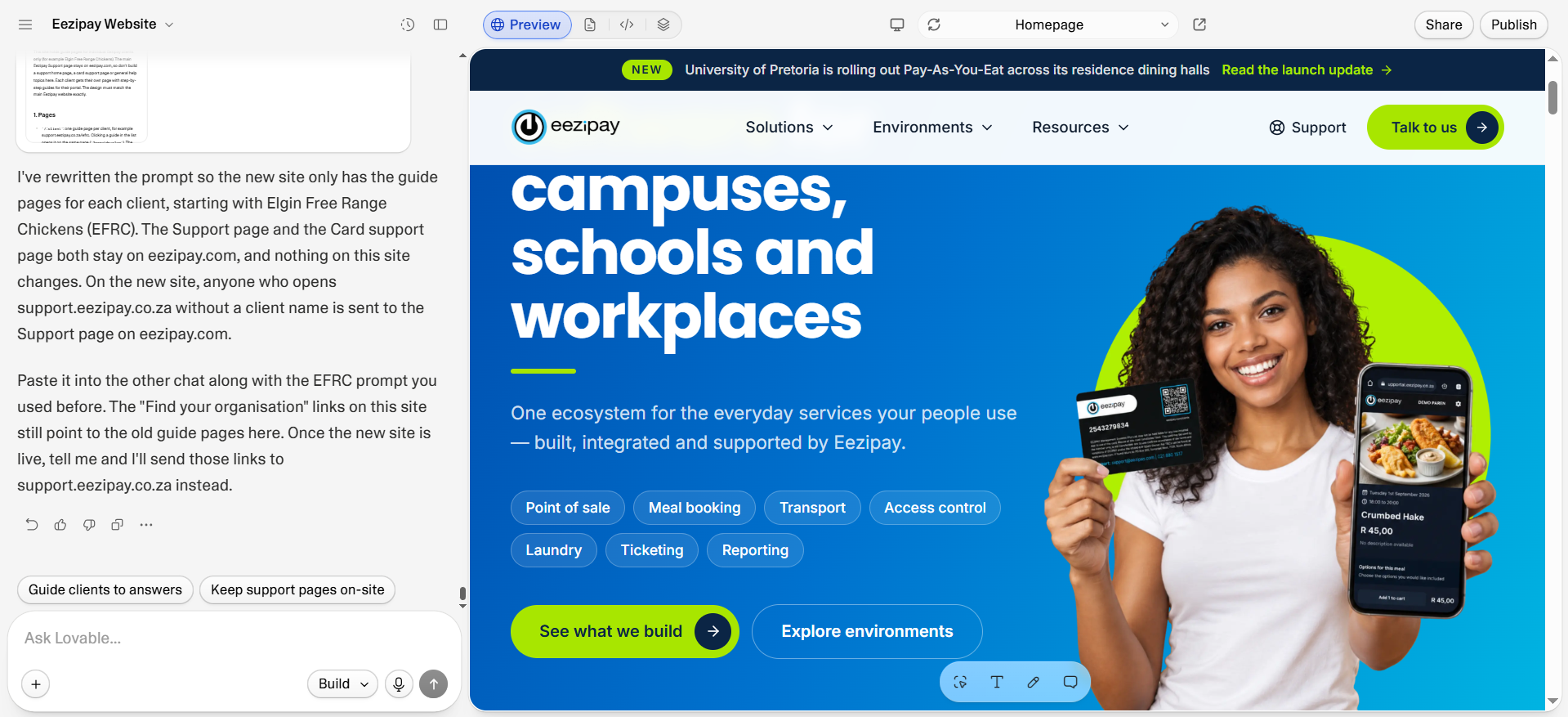
The new Eezipay website being refined in a modern build environment
How we build. The new site taking shape as it is refined, where content and layout can be changed by describing what's needed.

Not ready to migrate?

You don't have to rebuild everything to start.

A business can begin with a single landing page, campaign experience or new section built on modern technology.

This gives the team a chance to work with the new approach before deciding whether a broader website migration makes sense.

Start with a smaller project

Questions

Frequently asked.

Do we need to replace our current website?

No. Many businesses start by building new landing or campaign pages alongside the current site. A full migration only makes sense when the business case is there.

Can our marketing team really edit the website themselves?

For most everyday changes, yes. Content, layouts, new pages and campaign experiences become much more accessible. More complex work may still need technical support.

Can you keep our existing design?

Yes. We can recreate the existing website on newer technology so it looks and feels familiar to your customers.

Can we redesign the website during the migration?

Yes. A migration can be a good moment to improve design, structure, content and user experience. We help you decide how far to go.

What happens to our existing content and blog?

Existing content can usually be moved across. We plan what to migrate, what to improve and what to retire.

What happens to SEO and existing URLs?

We map existing URLs, set up redirects and carry across metadata so search visibility is protected through the move.

Is this only for WordPress websites?

No. WordPress is common and works well for many businesses. We also work with other traditional platforms, page builders and custom systems.

Can the website connect to our CRM and other systems?

In most cases, yes. Websites can connect to CRM, lead management, email, communication and automation tools, depending on what you already use.

Which technology do you use?

We are not tied to one platform. We work with a range of AI-enabled platforms and modern development stacks, and recommend what fits your business, team and plans.

Who owns the website and code?

Your business does. We agree ownership, access and hosting upfront so you are never locked in.

Will we still need a developer?

Developers may still be needed for more complex functionality, architecture or integrations. The difference is that everyday website evolution no longer needs to depend on a developer for every change.

Next step

See what this could look like for your website.

We can start by reviewing your existing website, understanding how your team currently works with it, and showing you what a modernised approach could look like.