Website Modernisation

Software + Products

Some problems need something that doesn't exist yet.

We help businesses turn real problems, workflows and opportunities into practical software, digital tools and AI-enabled products.

From first prototype to working system, we focus on building the smallest useful thing that can create real signal.

Start with the problem. Build only what earns the right to exist.

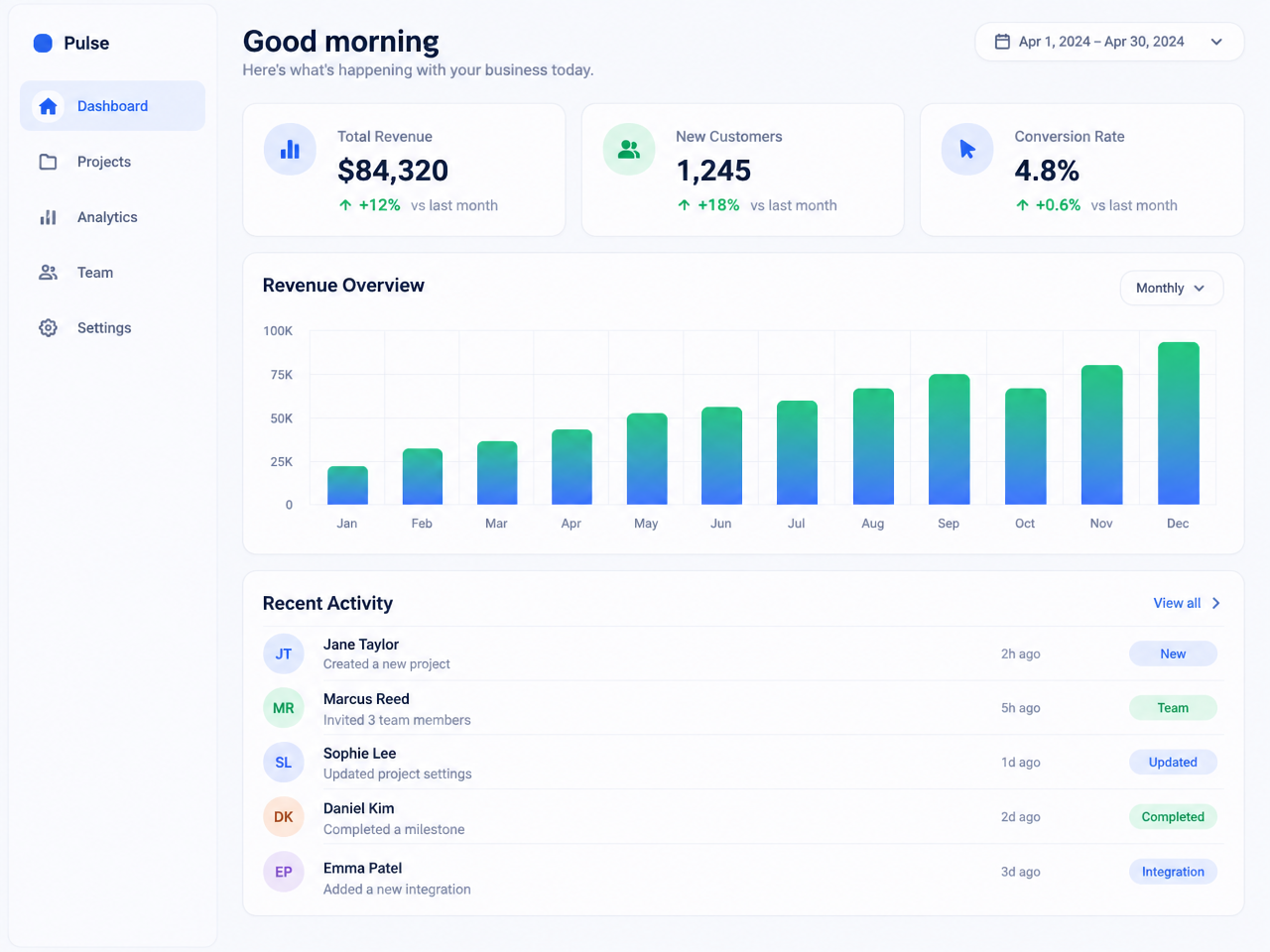
Illustrative custom software product dashboard

Illustrative example of a custom product interface.

What has changed

Software has become much easier to start building.

Custom software historically required significant budgets, specialist teams and long development cycles. That meant many useful ideas never made it beyond a spreadsheet, a workaround or a wishlist.

AI-assisted development is changing that.

Smaller teams can now design interfaces, connect systems, prototype workflows and test product ideas much faster than before.

The opportunity is not to build more software. It is to build the right software where existing tools do not fit the problem.

The cost of testing an idea has fallen dramatically. That changes what is worth exploring.

When to build

Not every problem needs custom software.

The workflow does not fit the tool

Your team is forcing a generic platform to support a process it was never designed for.

Too much work lives in spreadsheets

Important operational logic depends on manual sheets, copy-paste processes or one person knowing how everything works.

Systems need to work together

Several tools contain the right information but there is no useful interface connecting them.

A new customer experience is possible

You see an opportunity to create a digital experience, service or interaction that existing software does not provide.

You have a product idea

There is a real problem and a potential market, but the first version needs to be tested before significant investment.

If an existing tool solves the problem well, use it. Build when the gap is real.

What we build

From internal tools to new digital products.

Internal tools

Build lightweight software around the way the business actually works.

DashboardsJob managementWorkflow toolsInternal portalsReporting interfacesOperational systems

AI-enabled tools

Add useful AI capability to existing workflows or create new interfaces around AI.

AI assistantsDocument processingKnowledge toolsWorkflow agentsCustomer-facing AI features

Custom business software

Build systems around processes where generic platforms create too much friction.

Customer portalsBooking or workflow systemsSpecialist CRM interfacesData toolsBusiness dashboards

New digital products

Turn an idea or opportunity into a working product that can be tested with real users.

SaaS productsMarketplace conceptsDigital servicesMobile or web applications

How we build

Build the smallest thing that can teach us something real.

01

Understand

Define the problem, users, current workaround and business value.

02

Find the wedge

Identify the smallest useful version worth building.

03

Prototype

Create something tangible enough to test the idea, workflow and user experience.

04

Validate

Put it in front of real users and learn what is actually true.

05

Develop

Strengthen what proves valuable and improve the architecture as requirements become clearer.

We do not start by building the final system.

Early software should answer questions, not create years of technical debt.

The right level of build

Not every first version needs enterprise architecture.

The technical approach should match what the product needs to prove.

Prototype

Fast enough to test the idea.

Best for

Product discoveryNew workflowsInternal conceptsEarly user testing

Working MVP

Reliable enough for real usage with a defined group of users.

Best for

PilotsEarly customersInternal operationsMarket validation

Production system

More robust architecture, security, testing, monitoring and scalability where the product has earned the investment.

Best for

Larger user basesBusiness-critical systemsCommercial softwareComplex integrations

We scale the engineering investment as the evidence grows.

How we work today

AI changes the speed of development, not the need for judgement.

We use modern AI-assisted development tools to speed up research, interface design, coding, testing and iteration.

That does not remove the need for architecture, product thinking, quality control or experienced technical input where complexity demands it.

AI allows smaller teams to get much further before large development investment is required.

Faster prototyping

Turn ideas into something visible and testable much sooner.

Faster iteration

Change interfaces, workflows and features while learning from real usage.

Smaller initial teams

Prove more before committing to a larger engineering structure.

What we're building

ClickJet is one example of this approach.

ClickJet is an AI-enabled digital platform being developed through Opengro. It began around a simple problem.

Smaller businesses need modern websites, lead management, customer communication and automation, but many existing platforms are too complex, fragmented or expensive for the way they actually work.

We are building and testing the platform directly in the market, learning from real businesses and using that signal to shape what gets built next.

Explore ClickJet

Case

ClickJet

Problem
Fragmented and inaccessible digital tools for smaller businesses.
First wedge
Modern AI-enabled websites and simple business growth infrastructure.
Current direction
Websites, leads, customer communication, reviews, automation and AI-enabled business actions.
Status
In active development and market testing.

Client software

Sometimes the right solution belongs inside the business.

We can also work with organisations to design and build software around their own internal processes, customer experiences or strategic opportunities.

The goal is not custom software for its own sake. It is solving a problem that existing systems do not solve well enough.

For example:

  • An internal workflow tool replacing manual admin
  • A customer portal
  • An AI assistant connected to business systems
  • A specialised dashboard
  • A new digital service
  • A proof-of-concept for a new product idea
  • A lightweight application around an operational bottleneck

Technical depth

The right technical team depends on what we are building.

Opengro can take ideas and systems a long way with modern AI-assisted development.

For projects requiring deeper engineering capability, complex infrastructure, specialist security, advanced integrations or larger-scale production architecture, we bring in the appropriate technical expertise.

The model stays the same:

One clear problem.The right people.The right level of engineering for the stage of the product.

Questions

Frequently asked.

Do you build custom software?

Yes, where existing tools do not solve the problem well enough. If an existing tool fits, we will recommend it instead.

Do you build mobile apps?

Yes, where a mobile app is the right format. Often a responsive web application is a faster and simpler first step.

Can you build on top of our existing systems?

Yes. Many projects add a useful interface or workflow on top of tools you already use, rather than replacing them.

Do you use AI to write the software?

We use AI-assisted development to move faster, with people responsible for architecture, review and quality.

Who owns the code?

Your business does. We agree ownership, access and hosting upfront.

Can you take a prototype into production?

Yes. We strengthen what proves valuable and bring in deeper engineering expertise where the product needs it.

What technology do you use?

We choose the stack around the problem and the stage of the product, using modern web, cloud and AI technologies.

Do we need a technical person internally?

No. We handle the technical side and keep the solution understandable to the people who use and own it.

How do you decide whether to build or buy?

We look at what existing tools can do, how well they fit the workflow, and the cost of working around them. Build only when the gap is real.

What does a software project cost?

It depends heavily on scope, complexity, integrations and the level of production readiness required. A focused prototype costs far less than a production system, so we usually start small.

Next step

What problem is your current software not solving?

If your team is working around a process, forcing a generic platform to fit, or sitting on a digital product idea that needs to be tested, we can help work out whether something new is worth building.